
Modular before distributed
A modular monolith created strong domain boundaries and one practical deployment unit while the product and team were still moving quickly.
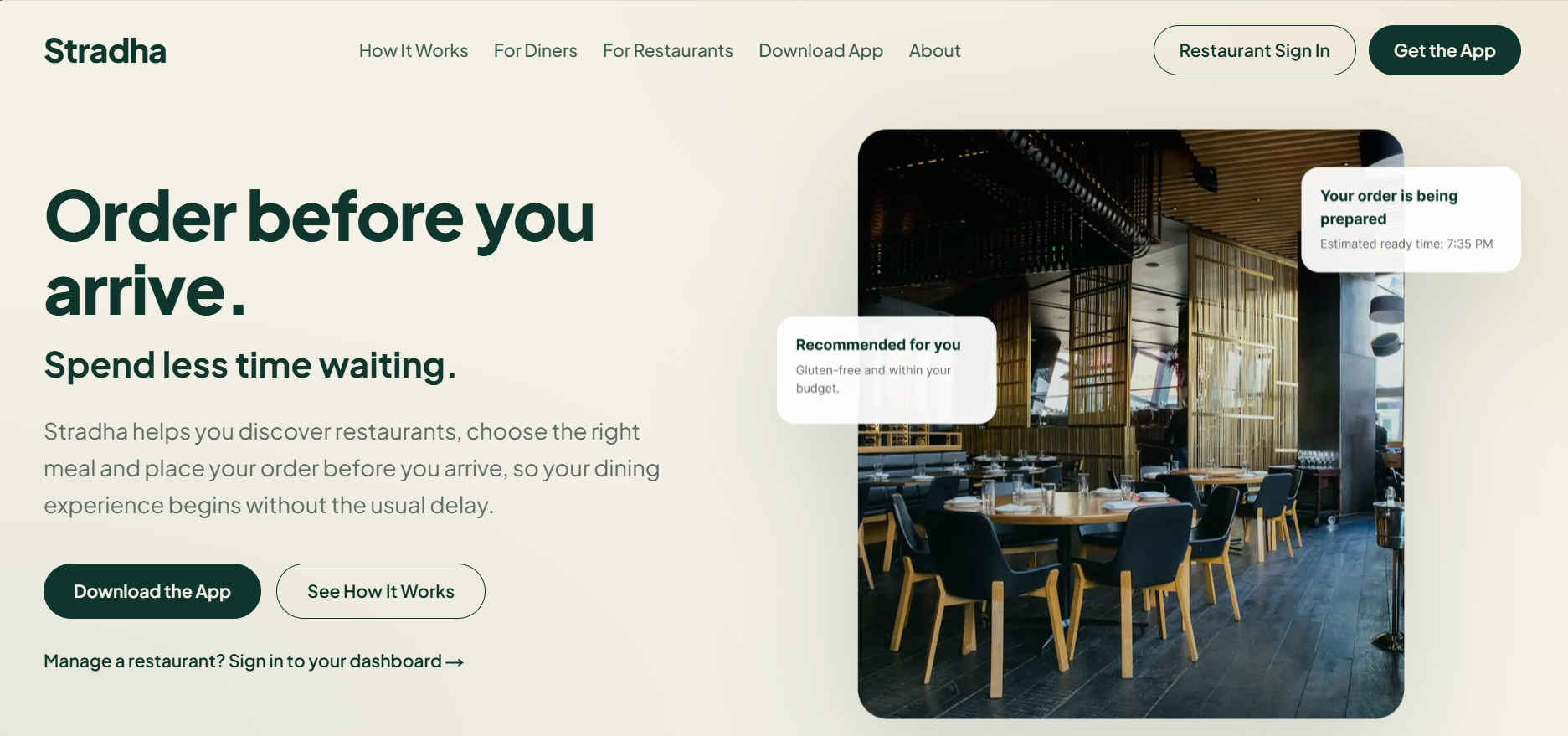
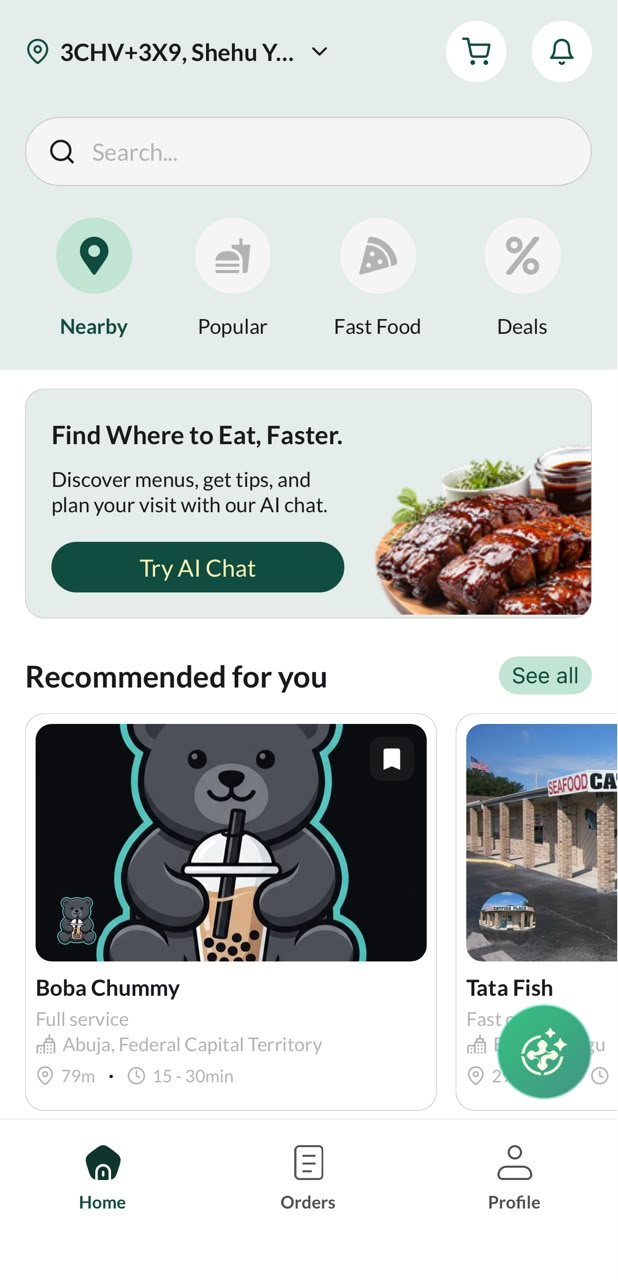
Pre-arrival dining powered by location, retrieval, and real-time coordination
Overview
Backend Developer · Contract
February—October 2026
Remote · Texas, US
Architected a scalable NestJS and TypeScript modular monolith spanning orders, payments, restaurants, and real-time notifications.
Designed the AI virtual waitress with AWS Bedrock, Claude 3.5 Sonnet, PostgreSQL, and pgvector using retrieval-augmented generation.
Defined the AWS infrastructure around App Runner, RDS PostgreSQL with PostGIS, and S3 with CloudFront for compute, routing, and media.
Built native-first Apple, Google, and Facebook OAuth with JWT exchange, plus SMS OTP onboarding with deferred email verification.
Established development, staging, and production delivery through GitHub Actions and isolated secrets with AWS Parameter Store.
Designed direct-to-S3 uploads and authored HLD, data-flow, security, and code-division documentation for leadership and engineering teams.
The conditions that shaped the system.
The simple promise—order before arrival and wait less—crossed many difficult domains: restaurant and menu data, payments, orders, real-time notifications, geospatial discovery, personalised recommendations, mobile authentication, media delivery, and coordinated deployment environments.
How the build was organised.
Architected a NestJS and TypeScript modular monolith with clear domains for orders, payments, restaurants, identity, and real-time notifications.
Built the virtual waitress as a retrieval-augmented system using AWS Bedrock and PostgreSQL pgvector so recommendations stay grounded in available restaurant and menu data.
Designed an AWS-native production path with App Runner, RDS PostgreSQL/PostGIS, S3, CloudFront, isolated environments, and automated GitHub Actions delivery.
A modular monolith created strong domain boundaries and one practical deployment unit while the product and team were still moving quickly.
The dining assistant retrieves menu and restaurant context before composing recommendations based on preferences, restrictions, and budget.
Authenticated pre-signed uploads send media directly to S3, protecting API memory and CPU while CloudFront handles low-latency delivery.
A little portfolio magic
Hi, I’m Orko—Evans’ assistant. Ask me about Evans, his work, or the systems he builds, and I’ll cast a little spell to find the answer.